
How Is a Bed Wedge Used in Everyday Sleep and Recovery Scenarios?
2025-12-16
A bed wedge is a therapeutic support product designed to elevate specific areas of the body during rest, sleep, or recovery. Commonly used in bedrooms, healthcare facilities, and home care environments, a bed wedge helps maintain a stable inclined position for the upper body, legs, or knees. This elevation supports improved posture alignment while lying down and is frequently recommended for individuals seeking positional support during prolonged rest periods.
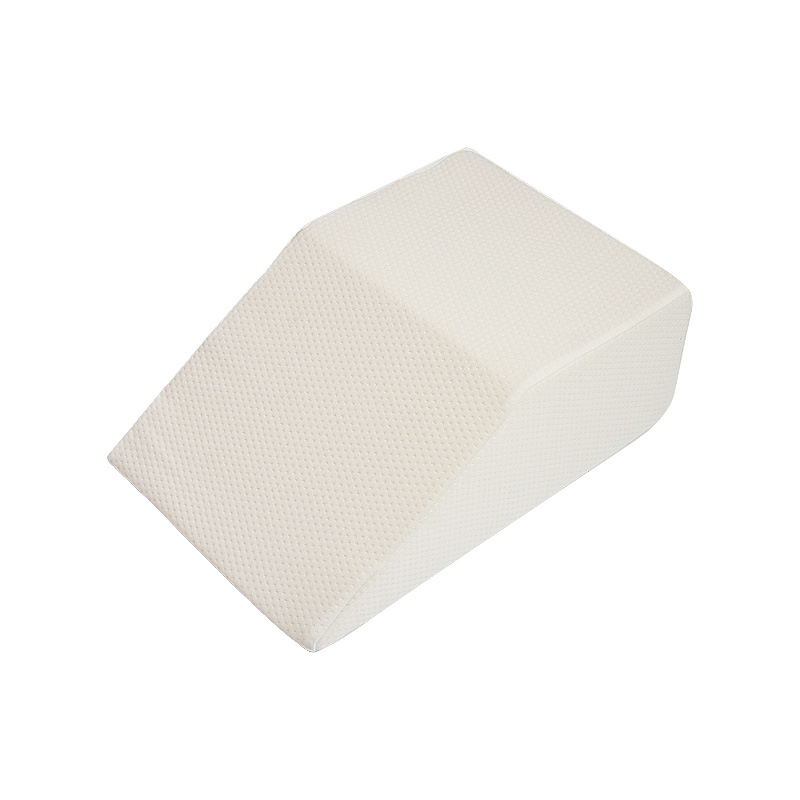
The central purpose of this article is to examine how a bed wedge functions in practical, everyday contexts, how it is structured from a technical perspective, and how it integrates into evolving sleep and recovery habits. Rather than focusing on promotional language, this discussion emphasizes objective usage scenarios, design logic, and real-world application patterns based on established consumer demand and healthcare-oriented use cases.
Modern bed wedges are engineered to balance firmness and comfort. The inclined geometry is not arbitrary; angles are carefully calculated to provide consistent elevation without causing pressure concentration. As sleep environments become more personalized and health-aware, the bed wedge has transitioned from a clinical accessory into a widely adopted home-support solution.
Key Product Parameters
Below is a consolidated overview of standard bed wedge specifications used across the industry, reflecting widely accepted manufacturing and ergonomic benchmarks:
-
Incline Angle: Typically ranges from 20° to 35°, supporting gradual elevation
-
Material Core: High-density polyurethane or memory foam
-
Cover Fabric: Breathable polyester or bamboo-blend textile, often removable
-
Dimensions:
-
Length: 24–30 inches
-
Width: 24–26 inches
-
Height: 7–12 inches (depending on incline)
-
-
Weight Capacity: Generally supports up to 200–250 lbs
-
Maintenance: Zippered cover, machine washable
These parameters allow the bed wedge to remain structurally stable during extended use while adapting to various sleeping positions.
How Does a Bed Wedge Support Different Sleeping Positions?
Understanding how a bed wedge functions begins with its interaction with body mechanics. Unlike flat pillows, a wedge maintains a fixed angle, preventing collapse during the night. This structural consistency plays a significant role in positional stability.
When placed under the upper torso, a bed wedge elevates the chest and head as a single plane rather than bending the neck independently. This approach helps maintain a neutral spinal alignment, particularly for back sleepers. Side sleepers may position the wedge partially under the shoulder and ribcage to achieve gradual elevation without excessive tilt.
For lower-body applications, positioning the wedge beneath the knees or legs alters hip and lumbar angles. This configuration is commonly adopted during rest periods when maintaining a bent-knee posture is recommended. The wedge’s sloped surface distributes weight evenly, reducing localized pressure points compared to stacked pillows.
In seated scenarios, a bed wedge may also be used as a backrest on a flat surface such as a bed or floor. The firm incline supports upright positioning for reading, working on a laptop, or extended sitting without relying on soft cushions that lose shape.
Common Usage Scenarios Include:
-
Overnight sleep support
-
Postural rest during daytime recovery
-
Elevated lounging or seated activities
-
Temporary positioning during limited mobility periods
The adaptability of a bed wedge across these contexts explains its sustained search visibility and continued relevance in sleep-related product categories.
Common Bed Wedge Questions Answered
Q: How should a bed wedge be positioned for nighttime sleep?
A: For nighttime sleep, the bed wedge should be placed directly on the mattress with the thicker end oriented toward the head or knees, depending on the intended elevation area. The user’s body should rest fully on the inclined surface to avoid abrupt transitions between flat and elevated zones. Proper alignment ensures consistent support throughout the night.
Q: Can a bed wedge be used long-term without losing shape?
A: A well-constructed bed wedge made from high-density foam is designed for long-term use. Consistent firmness retention depends on foam density, internal cell structure, and load distribution. Rotating the wedge periodically and using it on a stable surface can further extend its usable lifespan.
These questions reflect recurring search queries and highlight practical considerations users evaluate before and after purchase.
How Are Bed Wedges Adapting to Changing Sleep and Care Trends?
The growing focus on home-based wellness and personalized sleep environments has influenced how bed wedges are designed and utilized. As consumers increasingly seek non-invasive, supportive sleep solutions, bed wedges are being integrated into broader sleep systems rather than used as standalone accessories.
Material innovation is one area of visible change. Foam formulations are evolving to balance responsiveness and support, while cover fabrics prioritize airflow and ease of maintenance. Compact packaging and vacuum compression have also become more common, aligning with modern logistics and e-commerce expectations.
Another notable trend is modular usage. Bed wedges are now frequently paired with adjustable beds, orthopedic pillows, and mattress toppers. This layered approach allows users to fine-tune elevation levels without relying on mechanical adjustment systems.
From a market perspective, search behavior indicates sustained interest in “how to use” and “how to position” queries related to bed wedges. This reflects a user base focused on practical application rather than purely aesthetic considerations. Educational content, clear usage guidance, and transparent product specifications continue to influence purchasing decisions.
In professional healthcare and home-care supply channels, bed wedges are increasingly standardized as part of basic recovery or support kits. This normalization further reinforces their role as a functional, everyday product rather than a niche solution.
In this evolving landscape, manufacturers such as Zhehe continue to refine bed wedge designs with attention to material consistency, dimensional accuracy, and user-oriented detailing. For organizations or individuals seeking detailed product information, customization options, or bulk inquiries, direct communication is encouraged. Contact us to learn more about specifications, production capabilities, and how bed wedge solutions can be aligned with specific application requirements.